
Murals Meet Maintenance: Building Durable Exterior Coatings
Posted on March 20, 2026 by Brent Phillips
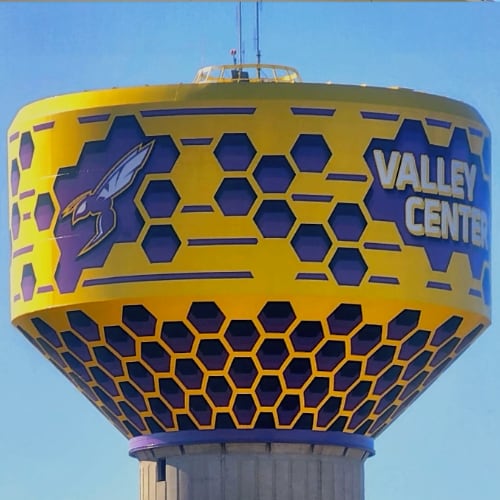
Murals and branding on water tanks and treatment facilities send a strong message to the community, but also face some of the harshest environments for public assets. To protect both art and infrastructure, water asset managers need exterior coating strategies that respect budgets, operations, and water quality. Durable coatings thus become central to asset management, not just cosmetic upgrades.
Art-and-Science for Protecting Building Exteriors
For utilities, the building envelope—the outer shell that separates the interior from the external environment—is more than a façade; it is the first defense against sun, wind, and contaminants that affect reservoirs, clearwells (covered storage tanks), and elevated tanks. Murals and branding must use compatible UV-resistant paint and protective coatings that do not compromise the structure or water safety. Research on protective coatings for heritage structures shows that well-designed coatings can preserve appearance, maintain vapor permeability, and protect the substrate over time.
- Support public-facing murals without sacrificing corrosion control.
- Align color and gloss retention with long service intervals.
- Ensure coatings do not introduce contaminants or affect water quality.
What Makes a Coating Durable
For water assets, durable exterior coatings must perform mechanically and chemically under continuous exposure. Laboratory and field studies show that polymers and composites degrade under ultraviolet radiation, moisture, chloride salts, and temperature cycling if not properly formulated and protected. Systems used on penstocks and outlet works highlight the value of abrasion-resistant polyurethane and other coatings that withstand impact, immersion, and cleaning.
Key indicators of a long-lasting coating system include strong adhesion (the ability to stick), resistance to chalking (surface powdering) and cracking, controlled permeability (ability to let certain vapors pass), and compatibility between the primer (first layer), intermediate, and finish (top layer) coats. When these factors work together, durable exterior coatings can extend the lifespan of the coating and reduce the need for complete removal and replacement (full-stripping cycles).
Environmental and Urban Exposure Challenges
Above-ground tanks and treatment buildings are exposed to many environmental factors, including ultraviolet (UV) radiation, freeze–thaw cycles, wind-driven rain, deicing salts, and air pollutants. Studies of infrastructure materials show that UV light can make polymers brittle, while chloride (salt) and moisture drive corrosion (rust) and concrete deterioration, reducing service life if building protection is inadequate. In urban settings, graffiti-resistant performance is also important; transportation agencies test anti-graffiti systems for ease of cleaning, resistance to color fading, and resistance to weathering before approving them for bridges and walls.
For water authorities, the lesson is clear: exterior systems must be selected for the combined effect of climate, urban pollution, and vandalism—not just for initial appearance.
Integrating Maintenance Planning into Design
EPA and state guidance emphasize proactive facility operations and maintenance to protect water quality. The same principles should guide coating selection: design murals and finishes around durable coatings that allow easy cleaning, inspection, and localized repair without long service interruptions. Choosing graffiti-resistant finishes that can be repeatedly cleaned reduces risks.
When maintenance cycles, access, and safety constraints are considered up front, coatings become tools for resilience rather than recurring emergencies.
Smart Specification for Lasting Results
Smart specification connects aesthetics, performance, and standards-based testing in a way that asset managers can defend long-term. Public agencies use test methods and approval protocols to verify coating systems before listing them. Water utilities can use this approach by requiring documented performance for coatings, including UV, chloride resistance, and cleanability—relevant to potable-water environments.
By treating the building envelope as critical infrastructure and insisting on protective coating systems proven in demanding public-sector applications, water authorities can keep their assets functional, compliant, and visually compelling for decades.
When you are balancing community-facing murals with the realities of corrosion, UV exposure, and tight maintenance windows, you don’t have time for trial-and-error. Turn your next repaint or mural project into a long-term asset by contacting Cunningham Sandblasting at (620) 848-3030. Our experienced team partners with city water managers and asset teams to assess your needs, recommend proven exterior coating systems, and ensure meticulous application—helping you protect your most visible structures for years to come. Don’t let maintenance setbacks hinder your facility’s image and performance—put our proven experience to work for you today.